2025: From Ambition to Responsibility

As 2025 comes to an end, it feels like the right moment to pause and look back.
Not to celebrate milestones for the sake of it, but to understand what this year truly meant for XRF.
This was not a year of noise.
It was a year of validation.
When ambition meets reality
For years, we had been building quietly. Designing, testing, iterating.
In 2025, that work began to stand on its own — operationally, internationally, and under real pressure.
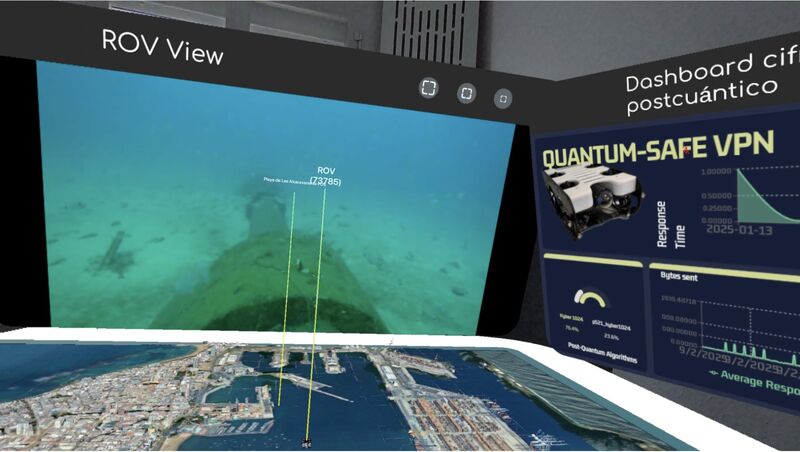
The year started with something very tangible: our first fully implemented operational project managing real emergencies in La Palma (Canary Islands).
Seeing XRF.compass used to coordinate people, assets, and decisions in a live emergency environment changed everything. What had long been a vision became a responsibility. Decisions mattered. Time mattered. People depended on the system working , not in theory, but in practice.
That moment marked a clear shift: XRF was no longer just proving technology. We were supporting those who must act when there is no margin for error.
Decision continuity, proven in the field
In parallel, XRF.apolo took its place at the tactical edge.
Its reception within the Spanish Army exceeded our expectations, being tested successfully across multiple exercises. But the real turning point came later in the year during the JFX exercise, where Apolo became the connective tissue between strategic and tactical levels.
That experience confirmed something fundamental for us:
Decision continuity is not a concept. It is a capability.
And when it works, it changes how operations are conducted.
Helping shape the ecosystem
2025 was also the year we stepped into a broader role.
Together with Isdefe, we organized at FEINDEF the first meeting that brought startups, investors, and end users into the same room. It was a small but meaningful signal that the defence innovation ecosystem in Spain is maturing and opening up.
Creating spaces where technology, operational needs, and capital can speak the same language is as important as building products themselves.
Europe and NATO take notice
At the European level, things accelerated quickly.
The European Union Security and Defence selected XRF for the first cohort of the EUDIS accelerator, placing us alongside teams shaping the future of defence innovation across the continent.
Shortly after, CWIX and REPMUS confirmed that our path was the right one. XRF.compass continued to evolve, meeting NATO standards and proving interoperability where it matters most: in coalition environments, under real operational constraints.
Different doctrines, same need
Internationally, another door opened as we began working with the Royal Netherlands Army.
Different country.
Different doctrine.
Same conclusion.
The need for a shared, intelligent decision layer is universal. Whether in national operations or multinational coalitions, complexity is growing faster than traditional command structures can handle it.
A milestone that defines what comes next
And just when the year already felt full, we closed it with a milestone that still feels surreal:
XRF was accepted into NATO DIANA for the 2026 cohort.
Out of thousands of companies, being selected reinforces something we deeply believe in:
Building sovereign, interoperable, and field-proven technology in Europe is not only possible, it is necessary.
Beyond milestones
Beyond the headlines and the programs, 2025 reaffirmed our purpose.
We build technology to support people who make critical decisions under extreme pressure.
To protect lives, infrastructure, and societies when conditions are at their worst.
To help them see clearer and act with confidence when time is scarce.
As we move into 2026, we carry that responsibility with humility, ambition, and a deep sense of duty.
This is just the beginning.