XRF and NATO MW COE launch wargame digitalisation initiative under NATO DIANA framework
XRF has launched a new cooperation initiative with the NATO Mountain Warfare Centre of Excellence to digitalise a tactical mountain-warfare wargame and turn it into a digitally enabled experimentation and training platform.
The initiative, developed under the NATO Defence Innovation Accelerator for the North Atlantic framework, focuses on the digitalisation of Battle for Begunjščica, a tactical wargame created by the NATO Mountain Warfare Centre of Excellence Concept Development and Experimentation Branch.
The work was formally launched during a two-day professional wargaming and experimentation activity in Poljče, Slovenia. The event brought together experts from XRF, the NATO MW COE and representatives from the Netherlands Ministry of Defence to explore the operational value of analogue wargaming and the practical steps required to translate tested tactical mechanics into a digital environment.
At the centre of the initiative is Battle for Begunjščica, a manual Kriegsspiel-style wargame designed to model the realities of mountain operations. Its mechanics account for terrain dominance, ridgeline control, line-of-sight limitations, weather effects, reconnaissance, manoeuvre and tactical decision-making in restrictive alpine terrain.
The system also supports experimentation related to the use of unmanned aerial systems in mountain warfare. By modelling concealment, reconnaissance limitations and drone-enabled observation, the game helps military planners and innovators assess how emerging technologies affect targeting, survivability, movement and decision-making in high-altitude combat environments.
Preserving tactical realism while gaining digital scale
The digitalisation programme aims to transform the manually operated wargame into a Minimum Viable Product capable of supporting operational planning, distributed training and future experimentation activities.
For XRF, the project is not simply about digitising a board-based system. It is about translating validated tactical logic into software while preserving the military realism that makes professional wargaming valuable.
Manual wargaming remains a powerful tool for military education and concept development because it exposes players to uncertainty, commander intent, tactical friction and human interaction. Digital systems, in turn, add scalability, data capture, distributed access and the potential to connect with modelling, simulation and future AI-assisted planning environments.
By bringing these two approaches together, the initiative creates a bridge between operational expertise and defence technology innovation.
A cooperation grounded in operational need
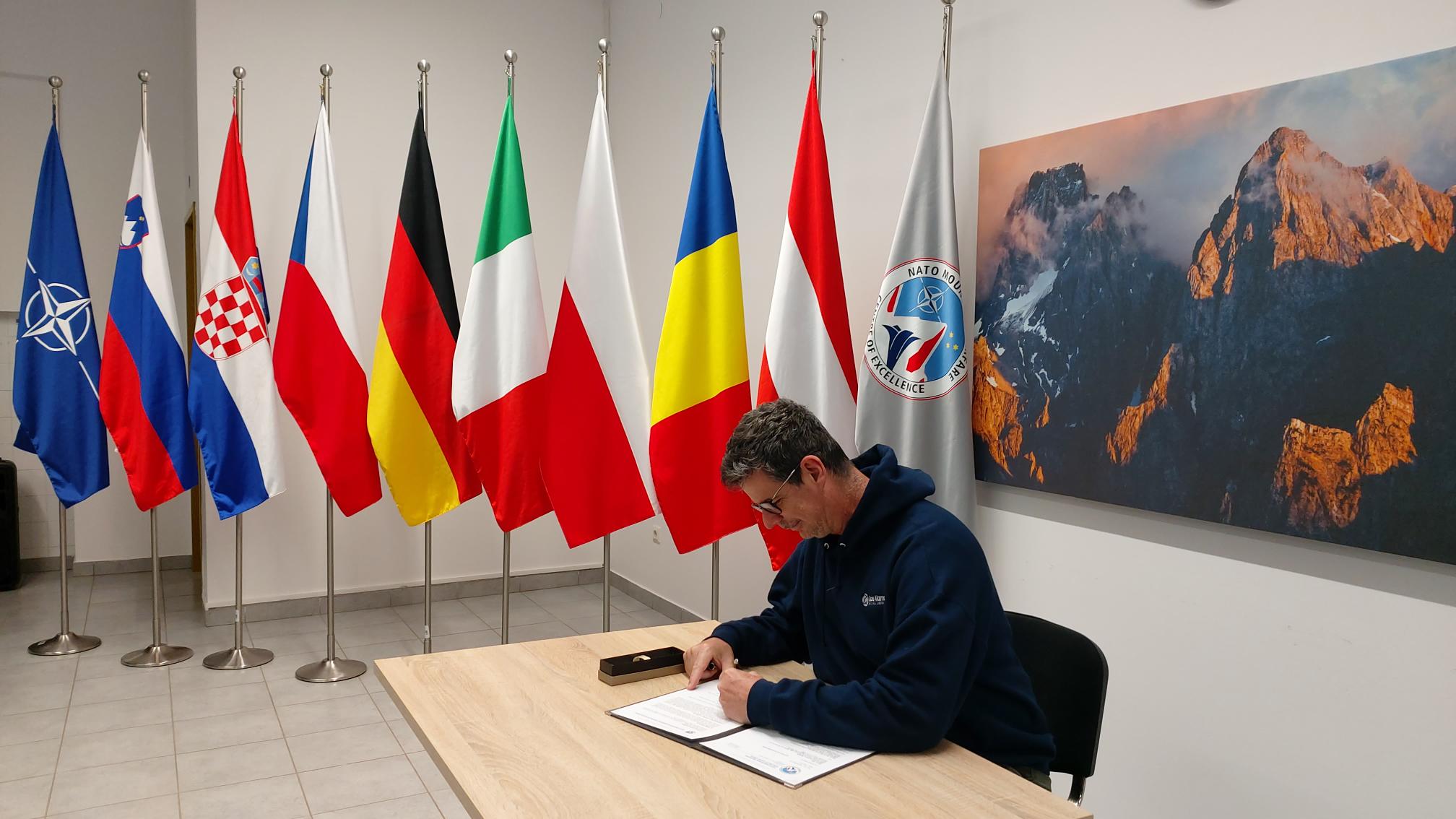
The programme of work was signed by Gustavo Medina del Rosario, CEO of XRF, and Capt(N) Peter Papler, Head of the NATO MW COE Concept Development and Experimentation Branch. A Letter of Cooperation was also signed to establish the wider framework for collaboration between XRF and the NATO MW COE.
The first development phase will focus on creating the MVP, translating gameplay logic into a digital format and defining the digital experimentation architecture. The prototype is expected to support further testing during the NATO MW COE Operational Planning Course in June, with a demonstration planned for the NATO DIANA International Demo Days in Paris.
Supporting the future of NATO experimentation
The initiative reflects NATO’s growing focus on combining operational knowledge with emerging technology to accelerate military adaptation.
Mountain warfare presents a particular challenge for experimentation and simulation. Terrain, weather, altitude, visibility, mobility and communications all shape tactical outcomes. A generic simulation environment cannot always capture these effects with the fidelity required for meaningful training and planning.
By digitalising a wargame already grounded in mountain-warfare expertise, XRF and the NATO MW COE can reduce development time while maintaining doctrinal and tactical relevance. Future iterations may support data collection, behavioural analysis, operational trend identification and integration with broader synthetic environments.
For XRF, this cooperation represents a practical example of defence innovation where it matters most: close to real operational problems, shaped by military expertise and designed to help forces adapt faster.
Through the NATO DIANA framework, XRF and the NATO Mountain Warfare Centre of Excellence are contributing to the development of agile, operationally grounded and technologically enabled tools that support Alliance readiness, tactical adaptation and future experimentation.